
Author(s):
Author(s):
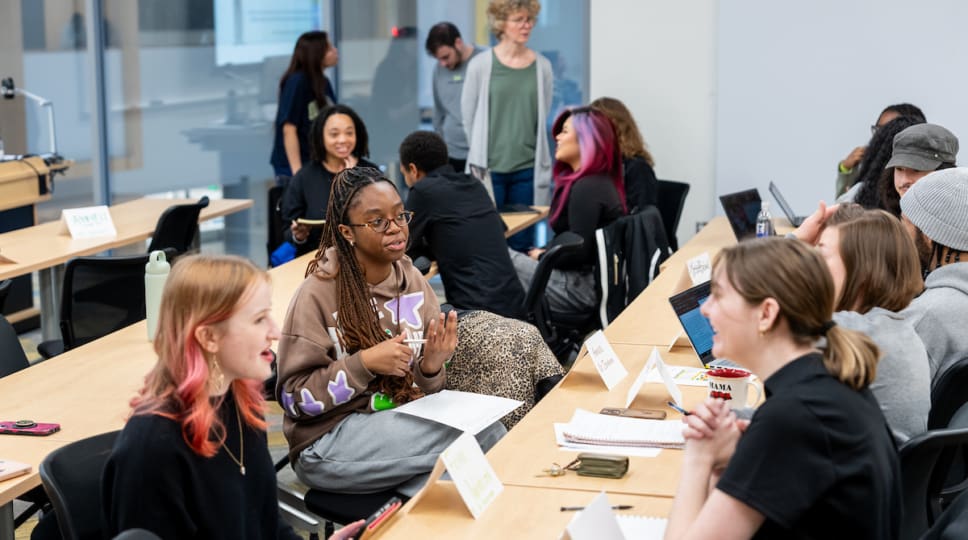
Caption: MD HIRES students and faculty practicing their “elevator pitches” about their research. View full size here.
Undergraduate Research Experiences (UREs) have been shown to help STEM students attain self-efficacy, develop their identities as scientists, and stay in STEM careers post graduation1. Furthermore, UREs enable students to obtain skills and experience that employers are looking for in their employees. Unfortunately, expanding capacity for undergraduate research in STEM majors is challenging for many reasons including institutional context which dictates faculty workloads and student graduation expectations. In this post, we describe a program we have developed to increase undergraduate research capacity in Biology at a public comprehensive university partly through the creation of faculty and student communities of practice (CoPs). Although our experience will resonate most with IUSE PIs at similar institutions, the CoP approach to professional development (PD) has been found to be effective in changing faculty practice in many higher ed settings just as we have found in ours. In the first year of the project, evaluation findings suggested that the model strengthened faculty confidence in mentoring undergraduate researchers, supported changes in mentoring practice, and contributed to student growth in independence, communication, and professional identity.
Caption: MD HIRES students and faculty engaging in a case study discussion about authorship of scientific papers.
The MD-HIRES Model
After developing course-based undergraduate research experiences (CUREs) with previous funding2, 3, we encountered a new challenge of having more students interested in independent UREs but static faculty capacity for mentoring former CURE students now excited to do research. Without the resources of an R1 institution, we could not replicate the FRI (Freshman Research Initiative) model of a CURE followed by an advanced URE developed at University of Texas Austin4. Additionally, although we encourage students to pursue summer research opportunities elsewhere, many students at comprehensive universities need to stay close to home.
Drawing on the literature and our experiences, we developed MD HIRES (Medium-Duration High-Impact Research ExperienceS), a model that integrates CUREs, paid UREs, and faculty and student CoPs to support scalable and sustainable mentoring. Our model accelerates a typical URE experience by building on training students receive in CUREs and other research skill-building courses. Each lab unit includes one faculty mentor, one MRA (Mentoring Research Assistant, a student with prior research experience), and four Fellows (students who previously completed a CURE in that subdiscipline) (Figure 1).
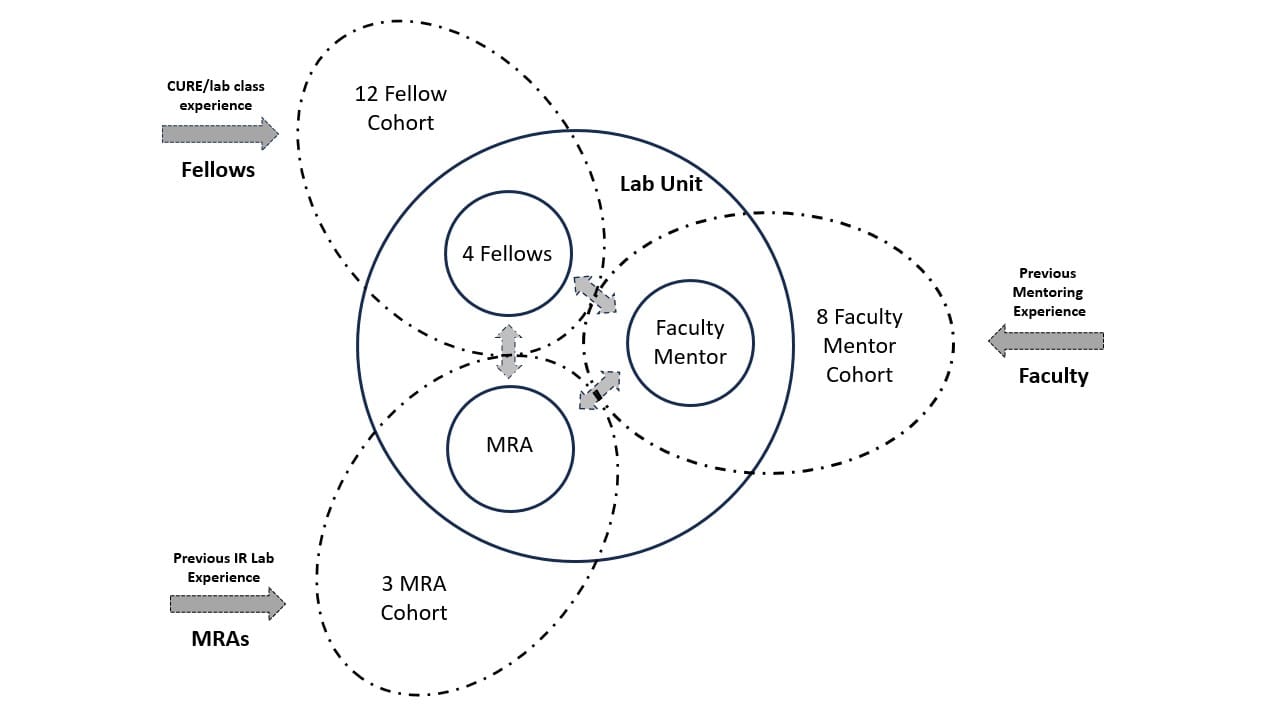
Figure 1. Model of the MD HIRES program showing pathways for faculty, fellows (undergraduates who have taken a CURE in a related subdiscipline), and MRAs (Mentoring Research Assistants, undergraduates who already have some research experience in that subdiscipline). The three cohorts meet separately and together for professional development activities in a Community of Practice framework. Each lab unit includes one faculty mentor, one MRA, and four fellows. View full size.
We also centralized professional development for both faculty and students. Faculty participated in a year-long monthly CoP focused on evidence-based mentoring, communication, expectation-setting, time management, and research group structure, drawing in part on resources from CIMER. Sessions included case discussions and reflection on faculty members’ experiences as both mentors and mentees and led to the development of tools such as tailored mentoring agreements.
Student Fellows and MRAs participated in biweekly professional development during their research semester. They met regularly as a full group, with breakouts for Fellows and MRAs, and received support in areas such as undergraduate grant writing, poster design, career preparation, and research communication. This centralized support reduced the time faculty mentors needed to spend on foundational training while helping students engage more quickly in meaningful research.
Three times during the research semester, faculty and students met together in joint PD sessions focused on topics relevant across career stages, including mentoring networks, work-life balance, authorship, and research dissemination. These sessions intentionally brought together participants from different labs to expand networks and surface perspectives that may not have emerged within individual research groups alone.
Takeaways
1. In class skills development followed by a URE can maximize student and faculty impacts in one semester UREs and is particularly important for transfer students
A CURE in a related subdiscipline (or even the same research topic) to the subsequent URE allows students to begin their URE semester with prior training not only in skills relevant to that topic but with skills related to conducting research including presenting their results. Faculty mentors reported that MD HIRES students were able to engage more quickly in meaningful research in contrast with students who begin UREs without relevant training. This aligns with Year 1 evaluation findings, in which faculty described students as more prepared, more confident, and able to take on meaningful research tasks earlier in the semester, including increased independence and project ownership. This model also provides incentives to faculty to accept students who did well in their CURE lab class but have few semesters left before graduation into their research lab as independent researchers. This can be particularly important for transfer students whose time at a four-year institution may be limited and who often have multiple demands on their time outside of school that prevent them from engaging in UREs earlier5.
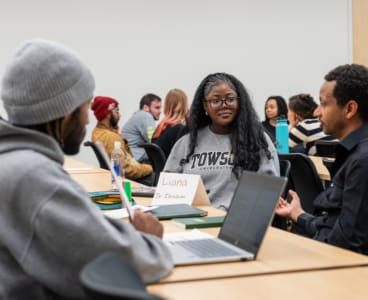
MD HIRES Students and faculty engaging in a case study discussion about authorship of scientific papers.
Representative faculty quote:
“Transitioning students from a CURE experience into research labs builds a sustainable model for skill development. They come in more prepared and confident, which makes mentoring more productive and enjoyable for everyone.”
2. Centralized student PD can reduce time required of individual faculty mentors
Our student PD supported students while reducing some of the time required of individual faculty mentors. For example, fellows engaged in PD on writing undergraduate grant proposals and designing research posters, reducing the load on faculty mentors. In addition, since students had already received some training in the CURE, this shortened the time needed to begin productive research. Thus, the model and student CoP help reduce some of the faculty time costs of mentoring undergraduates, which can also lead to increased URE capacity in a department. Year 1 evaluation findings further suggest that faculty implemented more structured mentoring practices as a result of the program, including the use of mentoring agreements, clearer expectations, and more intentional communication. Faculty also identified student outcomes such as increased confidence, stronger communication skills, greater independence, and engagement in activities such as poster presentations and grant applications.
Representative faculty quote:
“Trying to coordinate everyone’s schedules — especially when students are working jobs or have families — is a huge challenge. Even getting all of us in the same room can feel impossible sometimes. It’s one of those realities you just have to work around.”
3. Time to reflect and plan in the CoP was invaluable as faculty scaled up the number of students in their labs
The faculty CoP provided time and space to learn, reflect, and share ideas with peers. We learned from a previous faculty PD model built to focus on CURE pedagogy how important structured meetings are to encouraging faculty to try a new approach3. In MD HIRES, faculty incorporated ideas from the literature, panelists, and each other as they modified their approaches to their research groups. For example, since most faculty are trained at R1s, they have not been in research labs without Ph.D. students and postdocs and must consider how a lab with only undergraduates and a PI (and perhaps a master’s student) can effectively function, not just in terms of structure and communication but also in terms of how research goals can be set and attained. Evaluation findings from the first year of this three-year project indicate that the time spent in the CoP facilitated faculty learning, troubleshooting, and collective reflection (Figure 2).
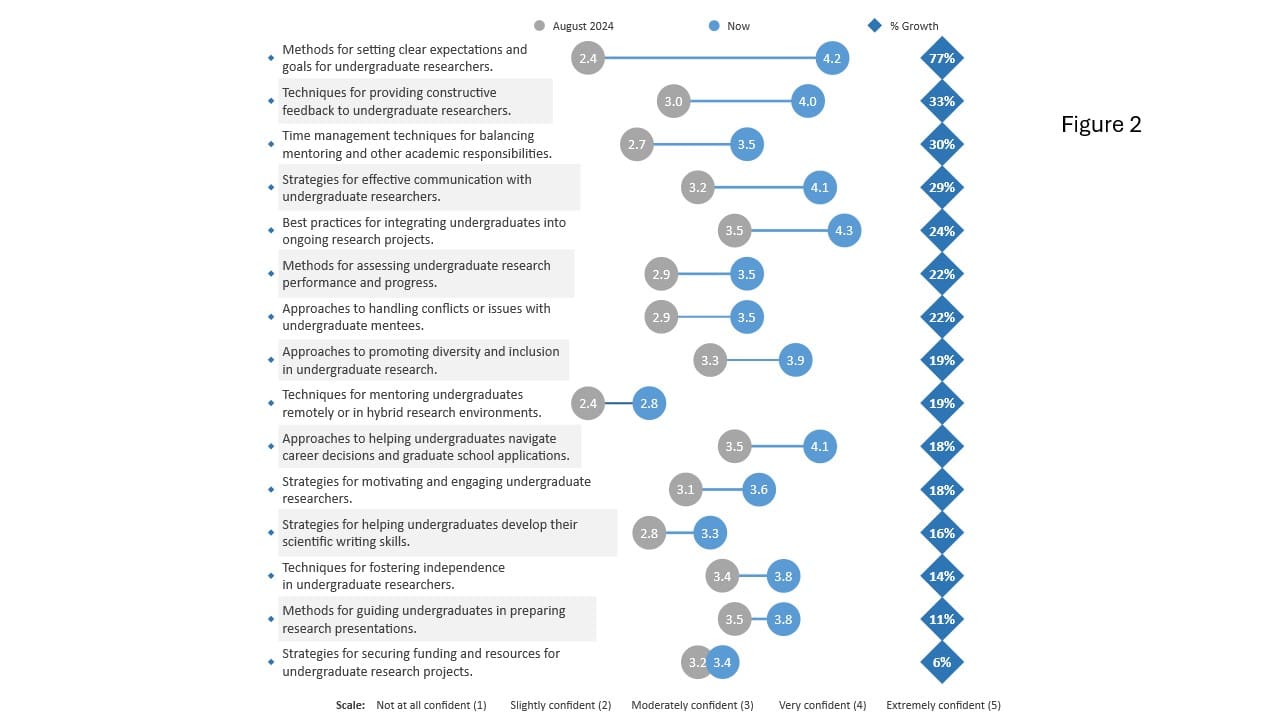
Figure 2. Faculty self-reported growth in mentoring confidence and preparedness following participation in the MD HIRES Community of Practice for one academic year (survey administered in May 2025). View full sized here.
Faculty survey findings reinforced this point, with participants describing the CoP as reducing isolation, fostering a sense of shared purpose, and providing valuable space to exchange strategies, troubleshoot challenges, and reflect together on their mentoring approaches.
Representative faculty quotes:
“It’s nice to discuss mentoring in the context of a community of faculty trying to improve their mentoring skills.”
“The Community of Practice made me more intentional about communication and organization. I think hearing how other faculty approached mentoring made me think differently about how I communicate expectations and feedback.”
4. Faculty and students meeting together in joint PD/CoP provided new opportunities for both groups to learn, reflect, and grow
The three joint sessions in the research semester provided new insights that would not have occurred if the groups had only met separately. These multi-role learning communities may be particularly effective at helping faculty understand student perspectives and improving a program to benefit all participants6. For example, in our first joint PD, we discussed a case study to consider the time commitments students might have that could prevent them from doing research. During these discussions, faculty realized that students were often thinking about the research experience in a transactional, resume-building manner, similar to a part-time job. This prompted the PIs to approach time management in the student CoP differently to emphasize how research is often not “on a schedule” but unpredictable and how important flexibility in scheduling must be, especially research with living organisms. For students with substantial commute times and responsibilities outside of class time, this requires flexibility by both the faculty mentor and the student and emphasizes the need for trust and effective communication. Evaluation findings from Year 1 further suggest that participants valued these shared spaces, with students reporting increased confidence, stronger communication skills, and greater awareness of research pathways (Figure 3, 4), and faculty noting the importance of hearing directly from students when refining their mentoring approaches.
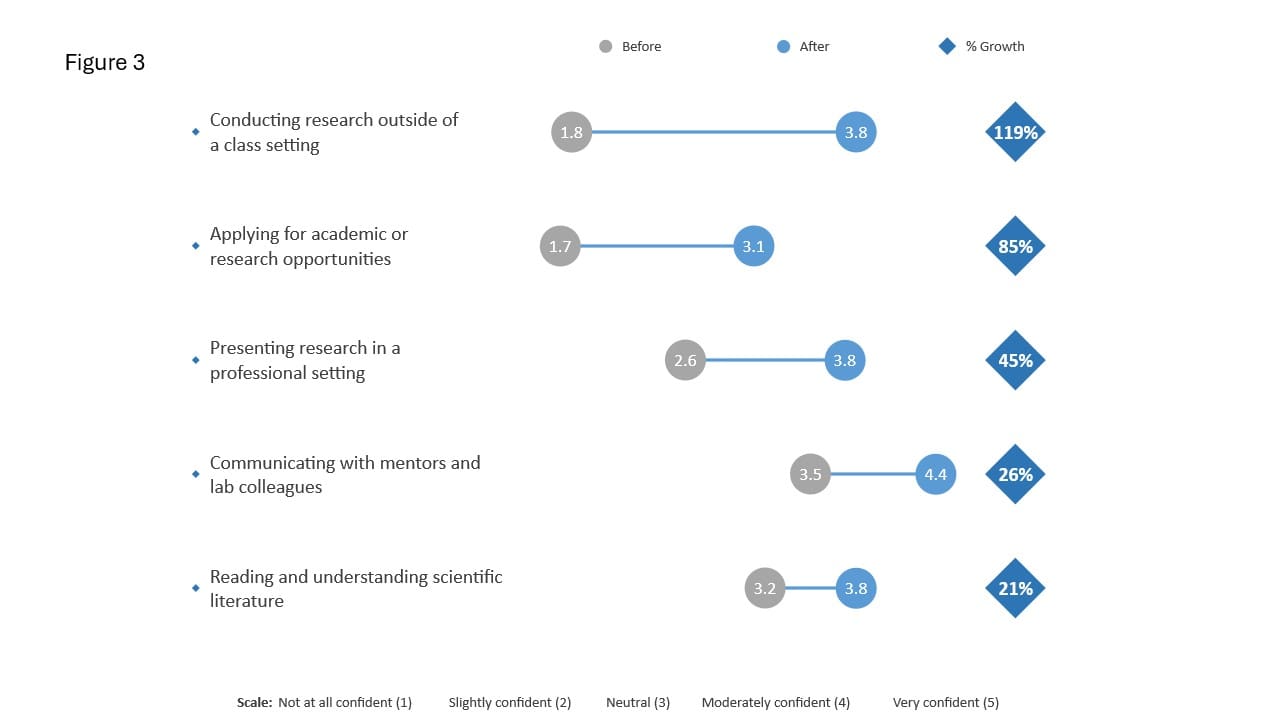
Figure 3. MD HIRES student self-reported growth in research and professional skills after one semester. View full size.
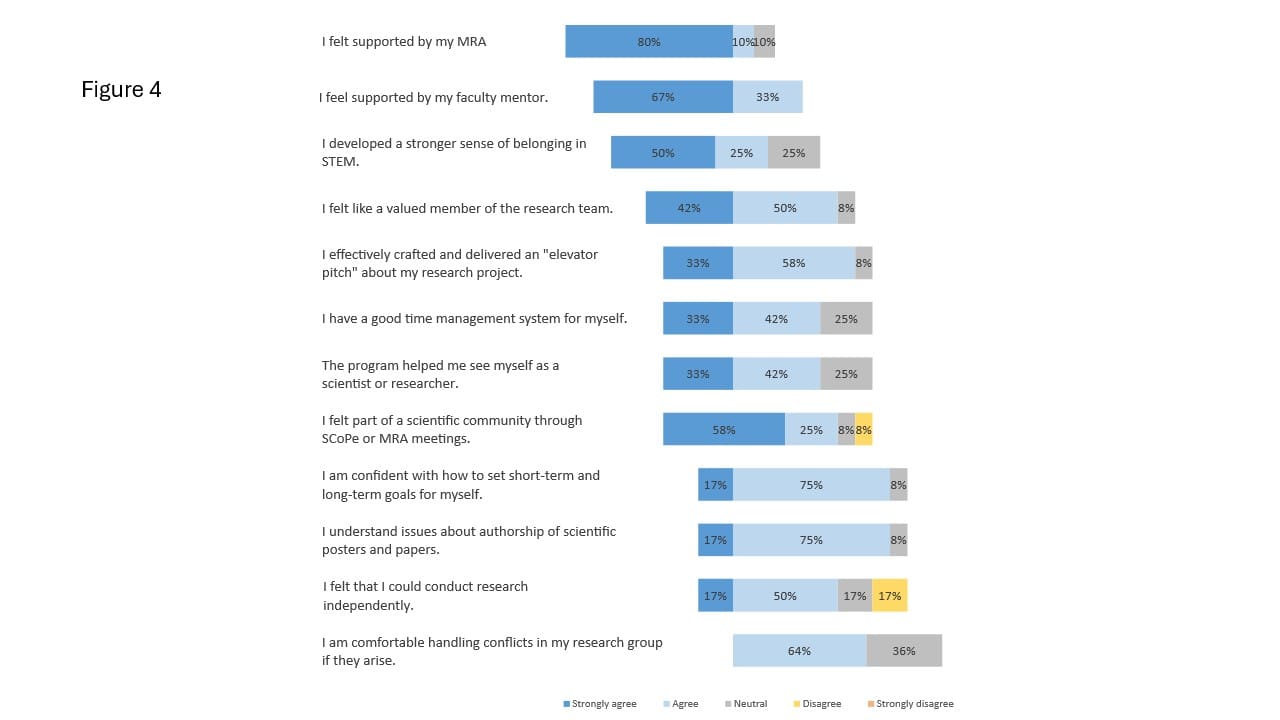
Figure 4. MD HIRES student self-reported growth as a result of participating in the MD HIRES Community of Practice for one semester. View full sized here.
Representative faculty quote:
“It was great to hear the students’ points of view on the scenario discussion. Sometimes, it is hard to know how students see different situations.”
In Summary
Despite the evidence that UREs facilitate student success and retention in STEM, many faculty are reluctant to mentor more than 1-2 undergraduates in their research groups each year. This may be a result of competing workload expectations, assumptions, and rewards, and from the additional time it takes to train undergraduates who generally will not be as productive as graduate students or post-docs. Creating faculty and student CoPs can help reduce the barriers to faculty mentoring, particularly at comprehensive universities without Ph.D. students or postdocs to assist in the research enterprise. With the aid of institutional resources such as faculty centers for teaching and learning or undergraduate research offices, such CoPs may be feasible and effective, particularly given the resources freely available to assist in these efforts such as those from CIMER. Ultimately, it is our vision that overcoming these challenges and providing more opportunities for students to gain lab and research skills will help our graduates to stand out and be more competitive as they seek post-graduate career, education, and research opportunities in STEM.
Acknowledgements:
This material is based upon work funded by the National Science Foundation IUSE program (Grant number 2336125). We thank all the faculty and students who have participated in MD HIRES to date and especially our co-PI, Matt Hemm, and our external evaluator, Sondra LoRe. This evaluation study was reviewed and approved by the Towson University Institutional Review Board (IRB# 2196).
Author(s)


